


ON HOLD
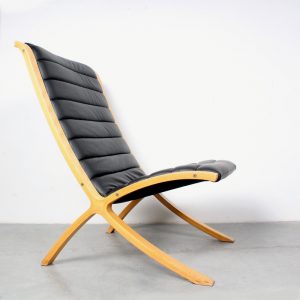
Model: Laminata
Designer: Paul Tuttle
Producer: Strässle
Origin: Switzerland
Year: 1977
Materials: Genuine black saddle leather, chromed steel, bent plywood
Condition: Good. Usermarks consistent with age and use.
Dimensions:
Note: Rare item!
More pictures will follow. Also available on request.
(APA) Berns, M. C. (2003).

Book: Paul Tuttle designs. University Art Museum, Santa Barbara (page 145-147)

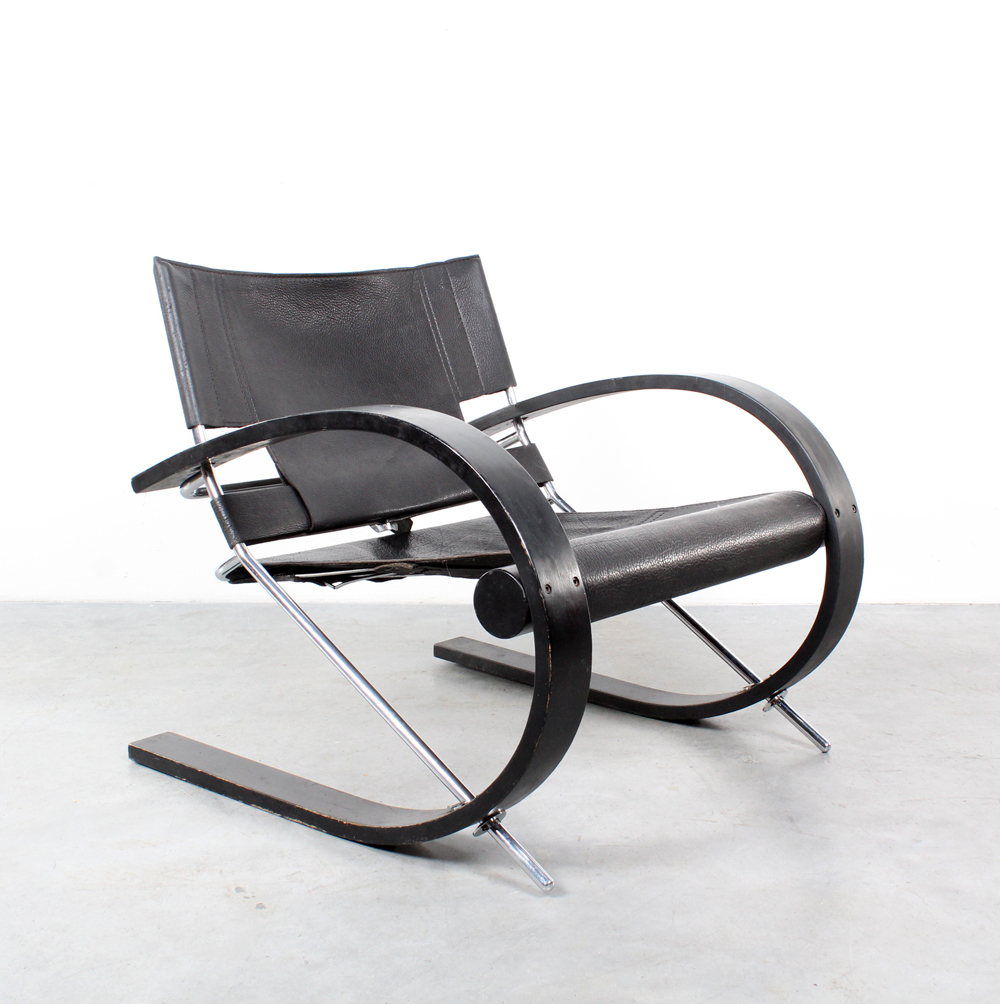
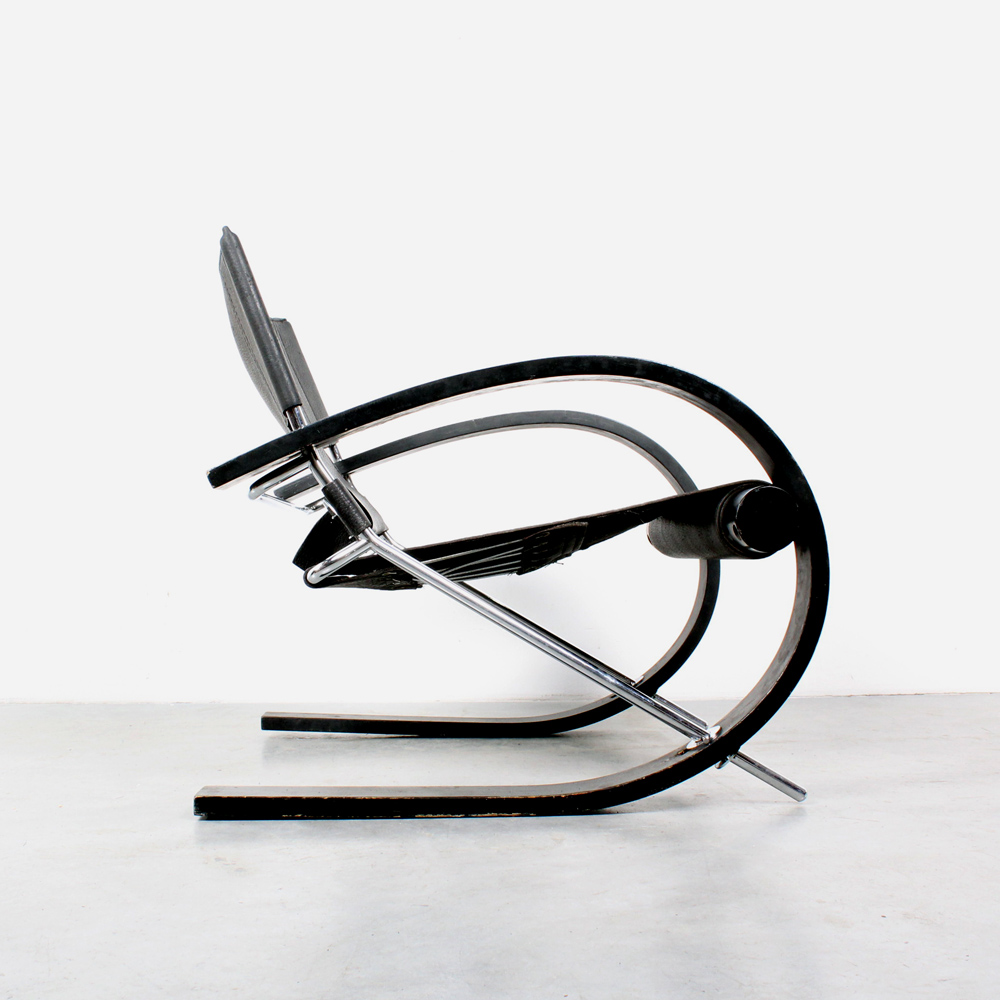
Perhaps more than any other chair, however, the Laminata lounge chair of 1977 expresses a core impulse in Tuttle's oeuvre to grapple with history and wrestle it into the present on his own terms. In this masterful design, he aggressively and almost violently recombines elements of classic mod-ernist design in order to create an entirely new vision of an armchair. The Laminata is strongly defined by its per-fectly proportioned, laminated wood armrests which are pulled into graceful curves that bend back under the seat to make a sturdy base. Formally, the contours of this fluid arm-to-leg composition recall the pristine cantilever
of Mies van der Rohe's MR 20 Armchair, while there is a definite material connection to Alvar Aalto's Armchair 400, which also features laminated wood arms in a similar configuration.

The earlier chairs have a purity of character that comes from their consciously limited palette of materials-for Mies, chrome and leather (or cane); for Aalto, wood and upholstery-but Tuttle brazenly mixes the warmth of wood with the chill of chrome so that the wood elements are pierced through by the unrelenting strength of metal. This forced marriage of opposites is further emphasized by the way that the laminated wood curve is held in tension by the penetrating chrome chassis, locked into place at the sites of contact with large round washers. This seems to tempt viewers to read it as a Frankenstein-like repair job, cobbled together with whatever was lying around, but the end product is anything but haphazard. The juxta-position of parts and forms is bracingly dynamic, and the more one studies it, the curves and angles, natural and man-made surfaces, tension and repose cohere to suggest a new standard of beauty, one containing a decided ele-ment of danger. Tuttle had girded sensual woods with rational metals in earlier designs, and this tendency belies a certain sexy, even kinky, treatment of his materials. As with the perverse desire to linger over car accidents portrayed in J.G. Ballard's contemporaneous novel Crash (1973), and David Cronenberg's later film of the same name, or the similar aesthetic explored from time to time by Helmut Newton in his photography, there is an adrenaline rush that accompanies the appreciation of Tuttle's beautiful collisions.